
While ASFPM’s story begins in 1976, the genesis for modern floodplain management was shaped by decades of earlier policies, disasters, and evolving ideas about how communities should reduce flood risk. From early federal flood control efforts and the rise of structural projects like dams and levees, to Gilbert White’s influential advocacy for nonstructural approaches, the creation of the National Flood Insurance Program, and the adoption of state floodplain management laws, these milestones helped define the environment in which ASFPM was formed. Explore these pre-ASFPM historical milestones to learn more about the events and ideas that influenced the association’s founding and the profession itself.
Flood History Milestones

1850-1936 Structural Federal Flood Control

The Swamp Land Act of 1850, enacted by the federal government, was one of the first programs directed at draining federally owned land by states to create productive agricultural lands. If states would drain the wetlands off the coast for Ag use, they were given the land by the federal government, and could in turn deed it to people for farming. This Congressionally authorized act became the basis for the transformation of the nation’s floodplains and wetlands. After the Swamp..Read More

1939-1968 Human Adjustment to Reduce Flooding

Gilbert White authors paper titled “Human Adjustment to Reduce Flooding—1939-1968,” which advocates a new way to think about floodplain management. Rather than build structural barriers to keep water away from people, we should give water the space it needs and keep people out of harm’s way. It was in this paper that White famously opined that “Floods are acts of God, but flood losses are largely acts of man.”
Early-mid 1960’s
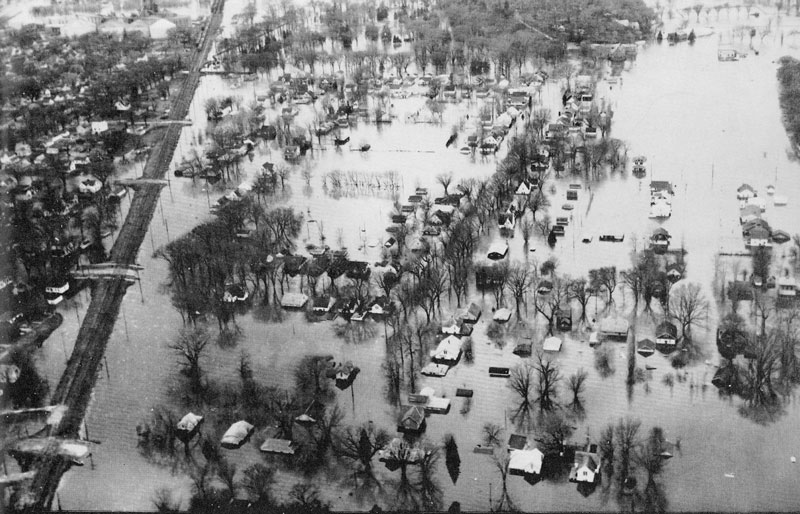
A number of states adopt floodplain management laws. Midwestern states often lead the nation in the early adoption and enforcement of floodplain management regulations as well as the creation of flood maps.
1968 – NFIP Created by U.S. Congress

U.S. Congress creates the National Flood Insurance Program (NFIP) following passage of the National Flood Insurance Act of 1968. View A Chronology of Major Events Affecting the National Flood Insurance Program .
1979 – NFIP Becomes Part of FEMA

President Jimmy Carter signs Executive Order 12127, effective April 1, 1979, establishing the Federal Emergency Management Agency ( FEMA ). NFIP becomes part of FEMA; moving from the Department of Housing and Urban Development.