
1850-1936 Structural Federal Flood Control
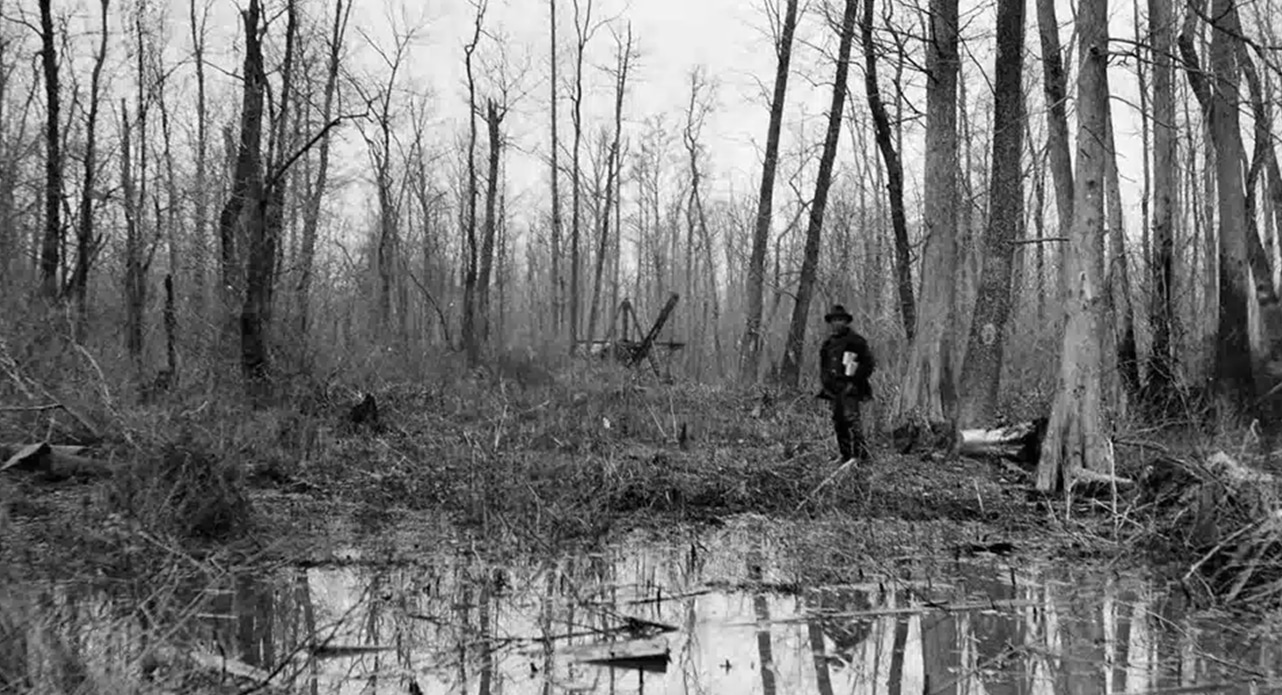
The Swamp Land Act of 1850, enacted by the federal government, was one of the first programs directed at draining federally owned land by states to create productive agricultural lands. If states would drain the wetlands off the coast for Ag use, they were given the land by the federal government, and could in turn deed it to people for farming. This Congressionally authorized act became the basis for the transformation of the nation’s floodplains and wetlands.
After the Swamp Land Act, the 1936 Flood Control Act launched the nation, using the energies of the US Army Corps of Engineers (USACE) into “engineering our rivers and streams” via an enormous commitment of constructing dams, levees and dikes, to “prevent” all future flood damages.
Congress passed the 1936 Flood Control Act and numerous subsequent laws, authorizing these civil works flood “control” projects, if project benefits could be shown to exceed the costs by even $1. Up to that point Congress had authorized specific levees, like the Lower Mississippi River federal levees built after the Great Mississippi River flood of 1927 and the Sacramento Flood Control System in 1917. Under the 1936 Act federal taxpayers covered 100% of the planning, design, and construction costs, while the local sponsor was responsible for future Operation and Maintenance (O&M) and for lands, easements and right of way (LER) for the project. This did not change until the Water Resources Development Act of 1986, when the federal/non-federal cost share was changed to 50/50 for the planning process and 65/35 for design and construction. The non-federal project sponsor was responsible for all lands, easements, right of way, relocation, and disposals (“LERRDs”). The USACE was such a traditional proponent and promoter for levees and dams that other flood risk reduction alternatives such as nonstructural mitigation, engineering with nature, or “setback” levees to allow passage for larger flooding events, were not considered in detail.
Since the flood-related damages to all congressionally-authorized levees and dams were, in general, fully covered by the federal government and non-federal levee damage was covered on an 80/20 cost-share, most project sponsors have been uninterested in alternative approaches, due to much higher sponsor cost.
A young Gilbert White, who worked in the Roosevelt White House Office of Budget and was asked to review the 1936 Flood Control Act and make a recommendation to the President, if he should sign or veto the Act. Gilbert recommended that the President veto the act because it would convince states and communities the federal government was responsible for managing flood losses, therefore states and communities need not take responsibility for managing flood risks or damages by avoiding or managing development in high flood risk areas. Roosevelt sent a note back to Gilbert that he understood his point — but that he had to sign the Act.
LAL 2-15-23
