Managing Threatened Oceanfront Structures: New Report Offers Solutions as Homes in Rodanthe Collapse

As homes in Rodanthe, North Carolina continue to crumble into the Atlantic Ocean, a newly released report from the N.C. Department of Environmental Quality’s (DEQ) Division of Coastal Management (DCM) and the National Park Service’s Cape Hatteras National Seashore (NPS CHNS) provides timely recommendations for dealing with erosion-threatened oceanfront structures.
Released in August, Managing Threatened Oceanfront Structures: Ideas from an Interagency Work Group, presents short- and long-term strategies to address the growing risks posed by coastal erosion. These ideas come at a crucial moment for a state dealing with climate impacts – from the Atlantic to Appalachia. Homes collapsed into the ocean in Cape Hatteras just days before Hurricane Helene left a trail of destruction across the Southeast with Western North Carolina getting hit particularly hard.
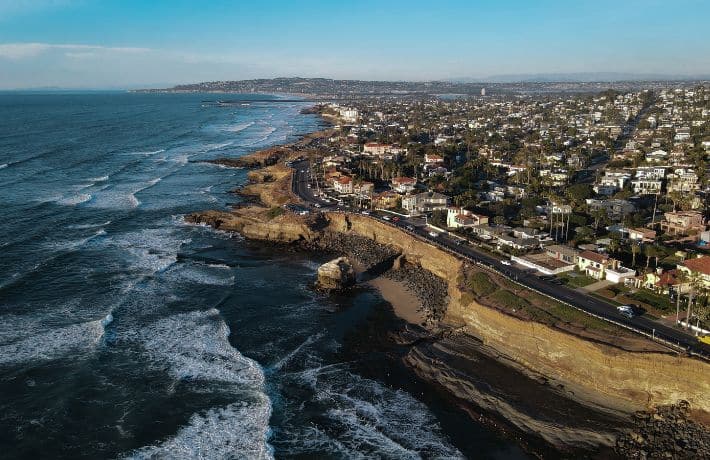
While the western part of the state is in crisis after the historic rainfall and flash flooding from Helene, in Carolina’s Outer Banks they’re continuing to deal with coastal erosion as three more homes collapsed into the ocean in just a few days. The Coastal Review described the scene on Rodanthe as a “total mess,” with debris scattered along miles of the Cape Hatteras National Seashore.
This is not an isolated event. Over the past few years, several homes in the Outer Banks, particularly in Rodanthe, have succumbed to the advancing sea. While the immediate focus has been on cleanup, the larger question looms: what can be done to prevent these disasters from occurring in the first place?
Key insights from the report
According to the report, more than 750 of approximately 8,777 oceanfront structures were considered at risk from oceanfront erosion (no dunes or vegetation between the structure and ocean), and this situation is anticipated to worsen as sea levels rise and storm events become more frequent. The interagency work group behind the report developed a series of ideas to address both short-term crises and long-term structural risks.
Short-term ideas
One of the central recommendations is to leverage existing programs like the N.C. Public Beach and Waterfront Access Grants Program to acquire, relocate, or remove imminently threatened structures. While the program currently has limited funding, the report suggests expanding it to address multiple properties at risk. By removing structures before they collapse, the state can prevent environmental damage and reduce the costs of emergency cleanups.
Another suggestion is to provide homeowners with more information about erosion risks, particularly under the National Flood Insurance Program (NFIP). Many homeowners may not fully understand the erosion threats to their properties, and better risk disclosure could encourage more proactive decision-making.
Additionally, enhancing insurance mechanisms to address threatened structures before they collapse could reduce the financial and environmental toll. The report recommends revisiting insurance strategies similar to the Upton-Jones Amendment, which allowed insurance payouts for the removal or relocation of structures before they collapsed due to erosion.
Long-term strategies
The report also calls for the creation of new state programs specifically dedicated to addressing erosion-threatened structures. These programs would provide a more stable and predictable source of funding for the relocation or removal of homes in danger.
Moreover, partnerships between federal, state, and local governments are highlighted as a crucial element for long-term success. By pooling resources, these partnerships could create innovative solutions, such as buyout programs for homes that are too close to the ocean or too costly to protect.
Learn more about the Threatened Oceanfront Structures report