OFIA’s 2021 Annual Report Released
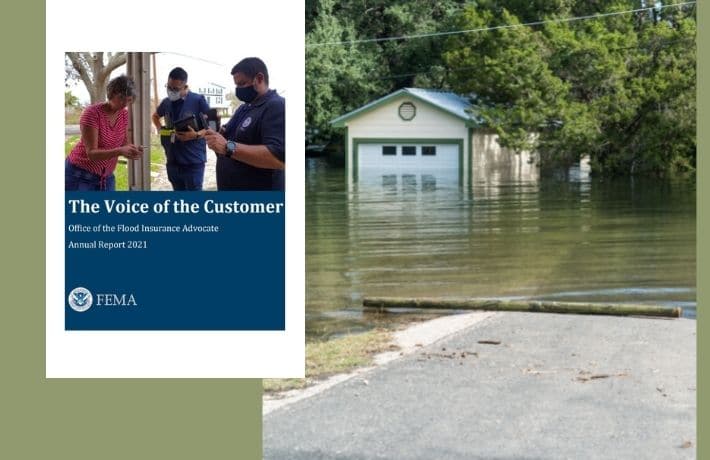
The annual report of the Office of Flood Insurance Advocate (OFIA) is now available. In this year’s report, Voice of the Customer- Office of the Flood Insurance Advocate Annual Report 2021, the OFIA uses real quotes and stories from OFIA inquiries to highlight the issue of affordability across the National Flood Insurance Program (NFIP). The Annual Report can be downloaded here.
For the 2021 Annual Report: The Voice of the Customer, the OFIA spotlights ongoing casework surrounding the issue of affordability in the following areas:
- Insurance – OFIA inquirers are worried about the rising cost of flood insurance.
- Mandatory Purchase Requirements – OFIA inquirers find mandatory purchase requirements of flood insurance confusing and unjust.
- Mapping and Risk Communication – Property owners are often faced with expensive choices based on Flood Insurance Rate Map’s depiction of risk.
- Hazard Mitigation Assistance – Hazard Mitigation Assistance grants are difficult to traverse and not geared toward the individual property owner or underserved communities.
- Floodplain Management and Mitigation – Mitigating structures can be costly and floodplain management requirements are confusing for the average homeowner and their community.
The 2021 Annual Report also features the following resources to promote affordability and understanding:
- Information on Elevation Certificates and the Letter of Map Amendment (LOMA) process are available at the FEMA Flood Map Service Center
- Light Detection and Ranging (LiDAR) may be used for map amendments
- The Community Rating System incentivizes mitigation and addresses some affordability issues
- OFIA produced four Educational Videos to improve customer understanding of basement coverage, flood risks, when flood insurance is required, and the claims process
The OFIA’s mission is to advocate for the fair treatment of policyholders and property owners by providing education and guidance on all aspects of the NFIP, fielding inquiries from NFIP customers, identifying trends affecting the public, and making recommendations for program improvements to FEMA leadership.