|

Flood risk perception in lands “protected” by 100-year levees

Natural Hazards
DOI: 10.1007/s11069-011-0072-6

Flood risk perception in lands “protected” by 100-year levees
Jessica Ludy and G. Matt Kondolf

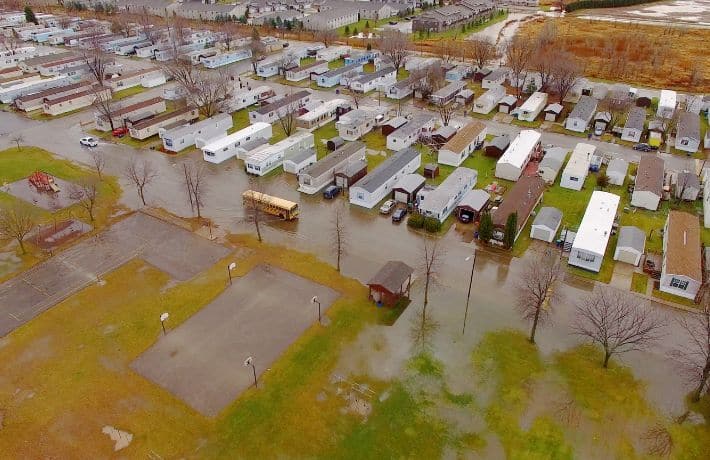
Under the US National Flood Insurance Program, lands behind levees certified as protecting against the 100-year flood are considered to be out of the officially recognized “floodplain.” However, such lands are still vulnerable to flooding that exceeds the design capacity of the levees—known as residual risk. In the Sacramento-San Joaquin Delta of California, we encounter the curious situation that lands below sea level are considered not “floodplain” and open to residential and commercial development because they are “protected” by levees. Residents are not informed that they are at risk from floods, because officially they are not in the floodplain. We surveyed residents of a recently constructed subdivision in Stockton, California, to assess their awareness of their risk of flooding. Median household income in the development was $80,000, 70% of respondents had a 4-year university degree or higher, and the development was ethnically mixed. Despite the levels of education and income, they did not understand the risk of being flooded. Given that literature shows informed individuals are more likely to take preventative measures than uninformed individuals, our results have important implications for flood policy. Climate-change-induced sea-level rise exacerbates the problems posed by increasing urbanization and aging infrastructure, increasing the threat of catastrophic flooding in the California Delta and in flood-prone areas worldwide.

To read further, please click here.
Similar Posts

  • |

    Choice Neighborhoods Implementation Grants Program from HUD

    Choice Neighborhoods Implementation Grants Program from HUD HUD is soliciting applications for the FY2016 Choice Neighborhoods Implementation Grants program. The maximum grant award is $30 million. The Choice Neighborhoods Implementation Grants support the implementation of comprehensive neighborhood revitalization plans that are expected to achieve the following three core goals: Housing: Replace distressed public and assisted…

  • |

    FEMA releases Oct. 1 2016 program changes

    NFIP announces Oct. 1, 2016 program changes on May 10, 2016 Go to https://www.nfipiservice.com/Stakeholder/FEMA8/W-16032.html to view the cover memo and four attachments, including: Attachment A – Transaction Record Reporting and Processing Plan Revisions Attachment B – Edit Specifications Revisions Attachment C –Updated Preferred Risk Policy and Newly Mapped Application Form Attachment D –Sample Form for…

  • |

    Changing the National Flood Insurance Program for a Changing Climate

    Climate is already escalating the flood risks facing communities and exacerbating the rising debts of the NFIP. The four sets of reforms identified by this Comment provide a road map for potential innovations that Congress can consider when it completes long-term reauthorization of NFIP, currently scheduled for May 2019. Read, “Changing the National Flood Insurance…

  • |

    What a 1,000-year flood IS and ISN’T

    South Carolina Gov. Nikki Haley (unintentionally, we’re sure) started the misinformation domino effect when she said her state has not seen the current level of flooding in 1,000 years. If you think that a 1,000-year rainfall event means that it occurs once every 1,000 years, then click on any of the links below that will…