Report: Insurance for Climate-Related Disasters Needs to Expand
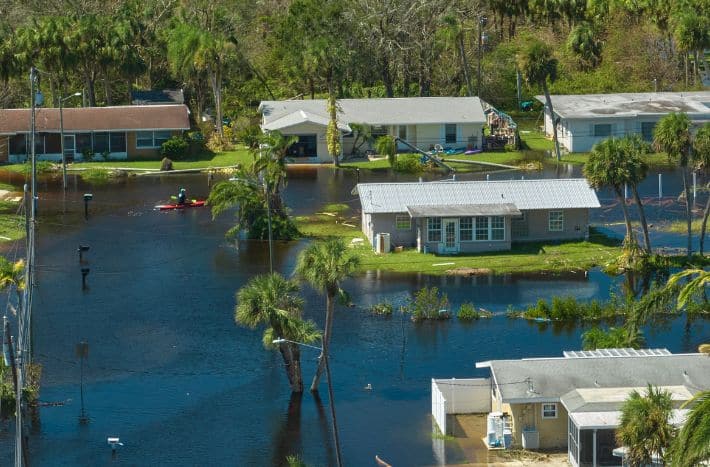
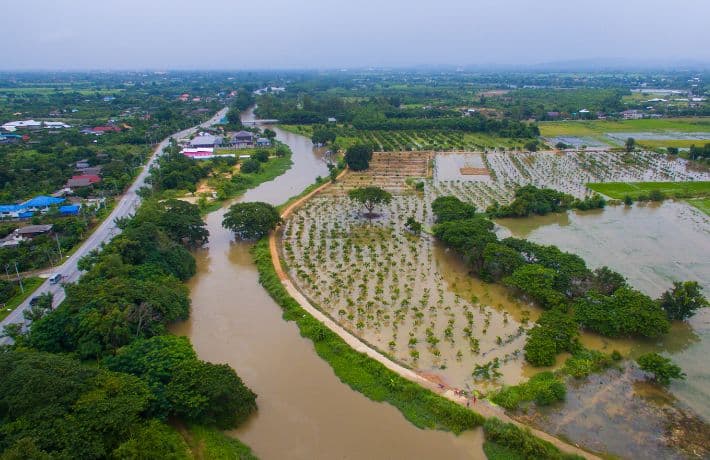
The frequency and severity of natural disasters such as floods, hurricanes, and wildfires are increasing in many parts of the country due to climate change. According to the National Oceanic and Atmospheric Administration (NOAA), climate disasters have inflicted $2.3 trillion in costs since 1980. In the last five years, large disasters on average cost the United States nearly a record $150 billion annually. Between 2012 and 2021, these events cost the U.S. at least $1 trillion in total.
These events translate into financial shocks to households, particularly in underserved communities who are most likely to bear the brunt of climate-related disasters and least likely to have full access to the main sources of financial resources for disaster recovery: savings, loans, federal aid, and insurance.
A new report, Inclusive Insurance for Climate-Related Disasters: A Roadmap for the United States, examines the role of insurance in recovery across socioeconomic groups throughout the nation and provides a framework for how insurance for climate-related disasters can be made more inclusive.
Written by Carolyn Kousky, associate vice president of economics and policy at Environmental Defense Fund and Karina French, manager, climate resilience research at Environmental Defense Fund, the report finds U.S. climate-related disaster insurance is often inaccessible, unaffordable, or does not meet the needs of certain populations.
“Many lower-income households and communities of color are disproportionately impacted by climate-related disasters,” said Kousky, “Without financial safety nets, disasters can be tipping points for households, worsening financial insecurity and forcing households to engage in coping mechanisms that can have negative short- and long-term consequences. Insurance can provide the needed financial protection.”
The costs attributed to disasters include direct damage to property, including homes, contents, and vehicles; expenses for evacuation and temporary living accommodations during repairs; expenses for generators, fuel, or other items when utilities or transportation are disrupted; and the loss of income from business interruption. However, as French and Kousky noted in a recent blog post, federal disaster aid, distributed through FEMA’s Individual Assistance program, “is not guaranteed, slow to distribute, and limited in quantity.” From 2010 to 2022, FEMA provided grants to households in only 43% of major disaster declarations, and the average payment to impacted households was just $2,860.
Throughout its 62 pages, Inclusive Insurance for Climate-Related Disasters: A Roadmap for the United States provides actionable guidance for federal, state, and local leaders, as well as insurers, to expand the financial protection of insurance those whose needs are not currently met by the market and make disaster insurance more affordable, accessible, transparent, people-centered, and just.
Recommendations for new policies, regulations, and products, include:
- Introducing new types of coverage in both private and public formats for insurance to be fully inclusive.
- Subsidizing insurance for the most vulnerable households by both the public sector and private sectors.
- Creating a “Community Reinvestment Act” for the insurance sector to extend insurance coverage to unserved and underserved populations.
- Developing public/private partnerships to design new types of insurance coverage and disaster mitigation programs.
- Developing regulations to cover the new types of insurance coverage.
- Simplifying claims processes and coverage statements for all policy holders.
- Making insurance coverage and claims data public for research purposes.
- Developing new regulations to prevent discrimination in insurance.
Developed by Ceres, in collaboration with the ESG Initiative and Wharton Climate Center at the Wharton School, the report was done in consultation with the organizations in several affected communities. It also includes studies from New York City, Portland, Oregon, and Puerto Rico that outline providing inclusive insurance to unserved and underserved communities.